FURNACE & HEATING
Crucible
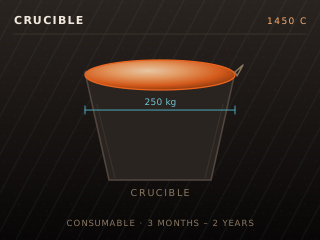
The refractory pot that actually holds the melt inside the furnace.

Specifications
- Typical capacity
- 20 – 250 kg
- Material
- Fused silica, clay-bonded mullite, or high-alumina refractory
- Maximum temperature
- 1350 – 1500 °C depending on body
- Wall thickness
- 20 – 45 mm at the base
- Thermal shock
- Fused silica is the most resistant; clay bodies the least
- Working life
- 3 months – 2 years, strongly dependent on duty cycle
- Form
- Usually a tapered bowl with a pouring lip or a flat rim
Technical parameters
- Fused silica
- Best thermal shock, best for borosilicate, most expensive
- Mullite / clay-bonded
- Good all-rounder for soda-lime, cheaper
- High-alumina
- Most chemically inert, longest life, heaviest
- Compatibility
- A crucible contaminated with a different glass must be retired
- Preheat rate
- Typically under 100 °C/h when new or after a cold spell
- Cost band
- Medium to high, and recurring
Overview
The crucible is the vessel the glass is melted in. It is the only part of a furnace that touches the glass, and it is a consumable: a working crucible lasts anywhere from a few months to a couple of years, and when it fails it usually fails by cracking and leaking a hundred kilograms of molten glass onto the furnace floor. Choosing one is a compromise between thermal shock resistance, glass compatibility and cost.
Where it fits in the process
Crucible is used in gather. The stage decides how hot the glass has to be when the tool touches it, which in turn decides how much of the work it can do in one pass.
Safe use
- A cracked crucible can release the entire melt. Inspect for weeping at the base and shut down at the first sign.
- Never add cold cullet to a nearly empty crucible. The thermal shock can split the wall.
- Dust from a broken refractory pot contains respirable silica. Wear a P100 respirator when removing one.
- Hot crucible fragments stay hot for hours after removal. Quarantine them somewhere nothing can walk into them.
How it is used
- Preheat a new crucible slowly — under 100 °C per hour — and hold it at temperature before the first charge.
- Keep a dedicated crucible per glass colour family. Iron contamination from a previous melt will grey a clear glass for months.
- Never let the glass level fall below a third full; the exposed wall above the melt overheats and spalls.
- Record the date it went in. Life is predictable enough that a calendar beats an inspection.
- Keep a spare on the shelf. A furnace down for two weeks waiting on a crucible is a studio that has stopped.
Compatible glass types
Matching the tool to the glass family matters less than matching the glass to itself — see the COE compatibility calculator before combining two glasses.
Related tools
Glass Furnace
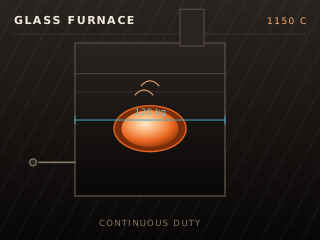
The crucible furnace that holds molten glass at working temperature, day and night.
Glory Hole
The reheating chamber that keeps a piece workable between steps.
Annealing Oven
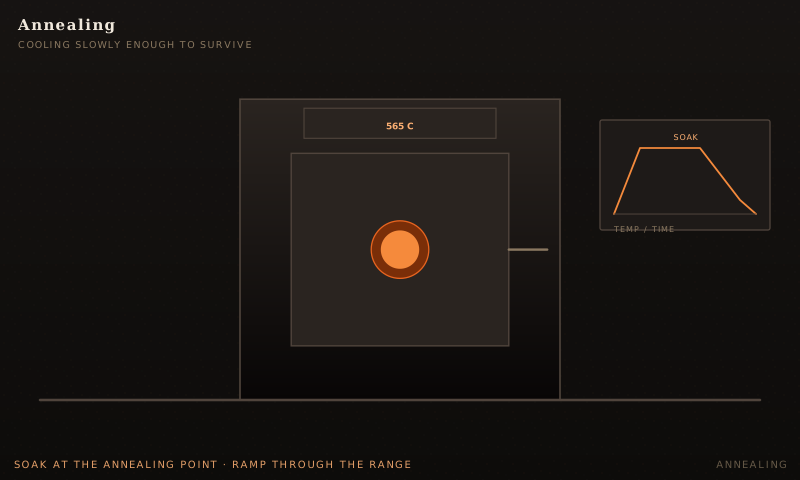
The heated chamber a finished piece goes into straight off the pipe.