The tools, table, everything is potentially hot. Hot metal looks like cold metal.
— r/glassblowingHeat & PPE
🔥 MOLTEN
An independent reference for glassblowers, with four interactive 3D simulators you can actually use and a 24-glass expansion database.
Written from published workshop practice. We sell nothing and take no affiliate money.
Temperatures, weights and schedules come out of a formula you can read, not a number chosen to look right.
Gather, shape, colour and anneal on a real model — no account, no download, no plug-in.
Hot tools, silica dust, ventilation and eye protection appear on the pages where they apply.
Community material, quoted and attributed. Every card links to the page that covers the subject in full.
The tools, table, everything is potentially hot. Hot metal looks like cold metal.
For Borosilicate, you'll need a glass torch that uses compressed oxygen and propane.
Most glassblowers don't wear gloves — you need to feel what's happening in the glass.
Glass doesn't conduct heat like metal. Our handles will never get hot no matter how long we work.
Every tool belongs to the stage it is used in. Pick a stage to see what it does, what it is made of and how it is used.
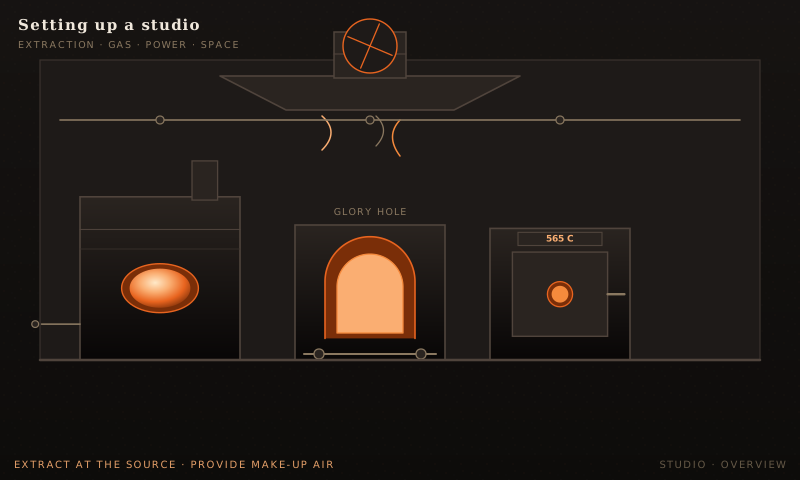
The furnace, the crucible, the glory hole and the annealing oven — the heat the whole studio is built around.
Pipes, hoses, blocks and pads — how glass gets out of the furnace and into a shape.
Jacks, shears, tweezers, pliers and paddles — the hand tools that turn a bubble into a vessel.
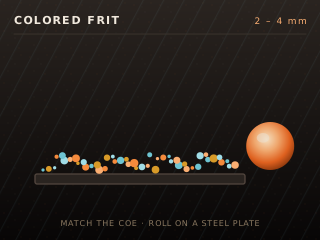
Frit, powder, oxides and precious-metal leaf — how colour gets into and onto glass.
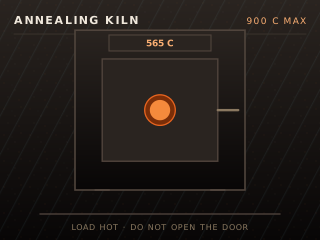
Kilns, controllers, files, pads and wheels — cooling a piece without cracking it, then finishing it cold.
The order matters more than the tool choice. Most failed pieces were lost in an earlier step than the one where the failure showed up.
STEP 1
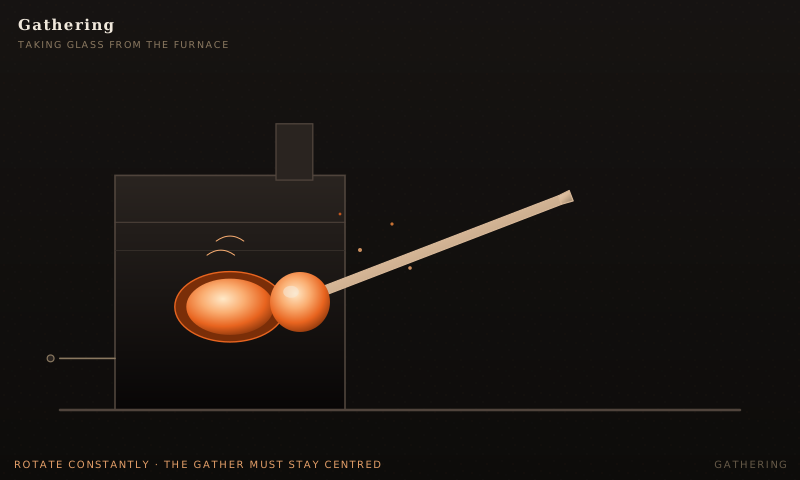
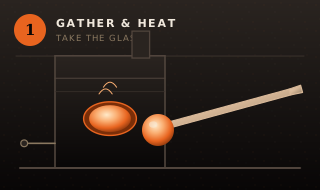
Dip the pipe into the furnace and take glass out of the melt. The gather decides how much glass you have and how even it is.
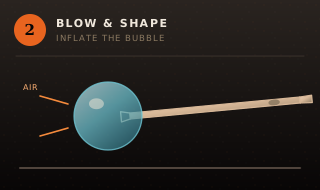
STEP 2
Inflate the gather and move it with jacks, pliers and paddles while it is still hot enough to obey.
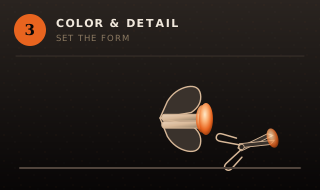
STEP 3
Apply frit, powder, oxide or leaf — and check that every colour shares a coefficient of expansion with the base glass.
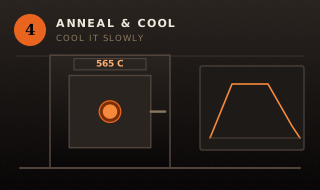
STEP 4
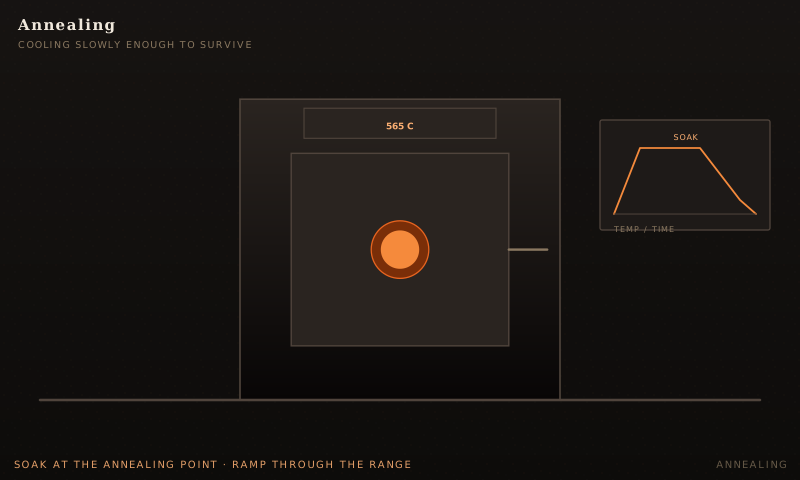
Hold at the annealing point, then cool slowly through the annealing range. This is what decides whether the piece survives.
Gather and blow a bubble, deform hot glass with the hand tools, paint frit onto a gather, and draw an annealing curve. Each one is a real model with real arithmetic behind it — not an animation. The preview below is a 2D cross-section that responds to the same pressure control, and it costs nothing to load.
Blowing is a matter of a small amount of pressure applied steadily. Push this up and the wall thins fast — the bubble holds the same volume of glass, so every millimetre of diameter comes out of the wall.
Real questions from glassblowing communities, with the community’s answer and a link to the guide that covers it properly.
“What kind of torch should I use for glassblowing? Do I need a liquid oxygen tank?”
To melt and work with borosilicate you need a torch that runs on compressed oxygen and propane. Liquid oxygen gives a hotter flame and more melting power, but most suppliers only deliver to non-residential addresses. A surface-mix or premix torch in the mid range is the usual first buy, and it will handle most clear and colour work.
“Most glassblowers rarely use gloves? Why?”
You need to feel directly what is happening in the glass, and no glove allows for that. An experienced artist learns what is hot and for how long. Gloves can get too hot, catch fire, or melt and cling to skin. Glass does not conduct heat like metal, so a pipe handle never gets hot no matter how long you work the glass.
“I'm a beginner — what equipment should I buy for a home studio?”
Get an intensive class first, then find a local hot shop to keep practising. Hot glass is a team effort — you need an assistant for anything large. Use the hot shop tools to find out what you actually like before you buy. Then start with a torch, propane and oxygen, regulators, hoses, an exhaust fan, a graphite slab, and clear rods and tubing.
The symptoms below are the ones that come up most often, in the order they tend to happen in a piece’s life.
| Symptom | Usual cause | Quick check | What to do | Source |
|---|---|---|---|---|
| Bubbles in the finished glass | Air trapped in the gather, or the melt is over-heated and boiling | Is the gather surface clean, and is the furnace above its working range? | Lower the furnace setpoint, gather more slowly, and skim the melt surface before gathering. | r/glassblowing |
| The piece cracks during annealing | Cooling too fast through the annealing range, or a COE mismatch between colours | What is the cooling rate in °C/h, and do all the glasses share a COE? | Slow the ramp through the annealing range, extend the soak, and check every colour for COE. | r/glassblowing |
| Uneven wall thickness after blowing | Inconsistent rotation, or blowing in sharp bursts instead of steadily | Is the pipe turning continuously, and is the pressure steady? | Keep the pipe turning constantly and blow with a slow, even pressure you can hold. | r/glassblowing |
| The colour has gone dull, grey or muddy | A reducing flame in the glory hole depositing carbon on the surface | Is the glory hole flame oxidising, and is the burner ratio correct? | Adjust to a neutral or oxidising flame and reheat the piece to burn the carbon off. | r/glassblowing |
| Tools stick to the glass and tear the surface | A dry wooden block or paddle, or steel tools applied too cold | Has the block been soaked, and were the steel jaws warmed first? | Soak wooden tooling thoroughly, warm steel tools in the glory hole before contact, and re-flame the torn area. | r/glassblowing |
| The piece shatters weeks after it was finished | Incomplete annealing — stress that was never relaxed | Was the soak long enough for the thickest section, and was the door left closed? | Re-anneal the piece if it is intact, and extend the soak and slow the ramp on the next one. | r/glassblowing |
| Chill marks and small checks around a jacked neck | Wet or cold tools applied to hot glass, or too much pressure in one pass | Were the jacks shaken dry, and was the neck hot when they closed? | Shake water off the blades, keep the neck hot, and re-flame the neck after jacking. | r/glassblowing |
| The base will not sit flat | The base was paddled or ground before the piece had stiffened or annealed | Was the base squared while the glass was still moving, or the cold-work done on annealed glass? | Square the base while it is hot and thick, then cold-work it flat on a dressed wheel after annealing. | r/glassblowing |
Nine of the twenty-eight, ordered by how often they come up in questions.
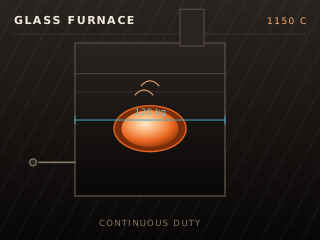
The crucible furnace that holds molten glass at working temperature, day and night.
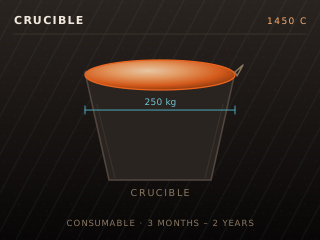
The refractory pot that actually holds the melt inside the furnace.
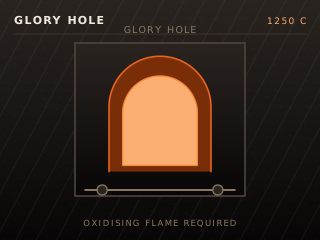
The reheating chamber that keeps a piece workable between steps.
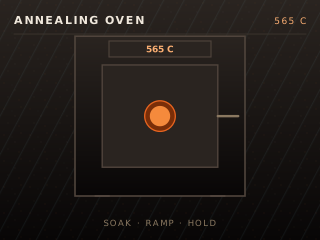
The heated chamber a finished piece goes into straight off the pipe.
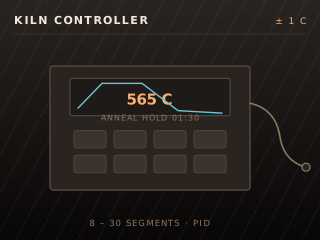
The ramp-and-hold programmer that runs an annealing or fusing schedule.
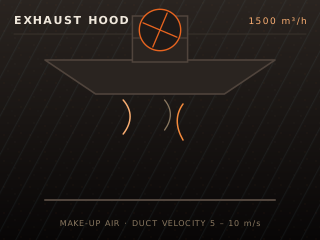
Extraction over the furnace mouth, the glory hole and the bench.
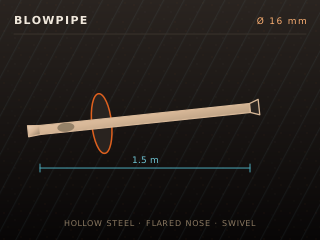
The hollow steel tube you gather, shape and blow through.
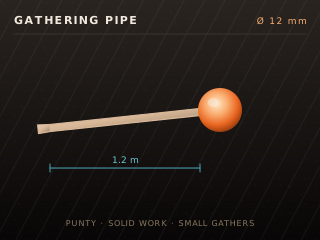
The smaller, lighter pipe used for solid work and off-hand gathering.
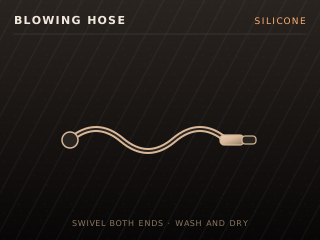
The flexible line from your mouth to the pipe's swivel.
Arithmetic you can check by hand, applied to the numbers that decide whether a piece survives the kiln.
Work out the raw materials for a batch of glass before you charge the furnace.
Build a cooling schedule from the glass type and the wall thickness.
Check whether two glasses can be worked together before you ruin both.
Threads that answer questions this site only summarises. Each one opens on the community it came from.
Ten long-form articles on the furnace, the bench, colour, the kiln and the shop.
What to buy, what to leave on the shelf, what your first piece should be, and why the honest first step is a class rather than a shopping list.
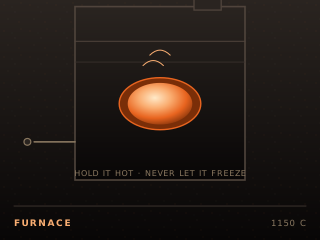
What a glass furnace is actually doing, why the crucible matters more than the burner, and the daily routine that decides how long a melt lasts.
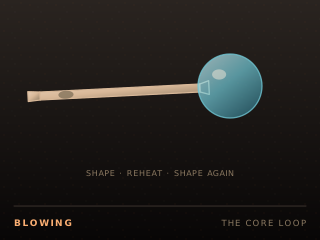
Gathering, rotating and blowing — the three motions every other technique is built on, and the reasons each one fails.
Hot glass is a team craft practised in a shared shop. The cheapest route in runs through someone else’s equipment, and the fastest way to waste money is to buy a furnace before you have spent a year on somebody else’s bench.
Read the beginner guide