ANNEALING & FINISHING
Grinding Wheel
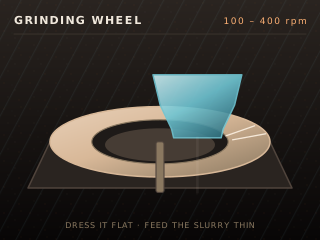
The flat cast-iron wheel and abrasive that true up a base or a rim.



Specifications
- Wheel diameter
- 200 – 600 mm
- Wheel material
- Cast iron, steel, or a bonded abrasive disc
- Speed
- Typically 100 – 400 rpm at the rim
- Abrasive
- Silicon carbide or diamond slurry, fed continuously
- Tray
- A water tray under the wheel, with a drain
- Cooling
- Water, both as lubricant and to stop heat cracking the work
- Grades used
- 60 – 600 mesh in sequence, then polishing
Technical parameters
- Flatness
- The wheel must be dressed flat or every base will be dished
- Slurry feed
- A thin, steady feed; a flood washes the abrasive away
- Speed control
- Variable speed is worth having for the fine grades
- Work holding
- A suction cup, a jig or a steady hand — never fingers alone
- Cleanliness
- Rinse between grades or the coarse grit follows you up
- Cost band
- Medium to high
Overview
A cold-working grinding wheel is a horizontal cast-iron or steel disc that spins in a water tray while abrasive slurry is fed onto it. It is used to flatten a base, true a rim, and remove the marks left by the pipe and the punty. It is the tool that turns a piece that came off the pipe into a piece that sits flat and feels finished. It is also the loudest and wettest thing in a studio that is otherwise neither.
Where it fits in the process
Grinding Wheel is used in anneal. The stage decides how hot the glass has to be when the tool touches it, which in turn decides how much of the work it can do in one pass.
Safe use
- A spinning wheel with slurry is a serious laceration hazard. Eye protection, a face shield and gloves, always.
- Never grind glass that has not been annealed. The wheel will crack it and the pieces will fly.
- Keep the slurry off the floor. A wet floor in a studio full of hot glass is how people fall onto hot glass.
- Never reach across a spinning wheel to adjust the slurry. Stop it first.
How it is used
- Dress the wheel flat before starting. An out-of-true wheel dishes every base you put on it.
- Grind the base flat on the coarsest grade first, then step up through the grades.
- Feed the slurry thin and steadily. Too little and the wheel glazes; too much and it stops cutting.
- Rinse the work between grades so coarse grit does not contaminate the finer wheel.
- Finish on a polishing pad. A ground base is flat; it is not yet clear.
Compatible glass types
Matching the tool to the glass family matters less than matching the glass to itself — see the COE compatibility calculator before combining two glasses.