SHAPING & TOOLS
Pliers
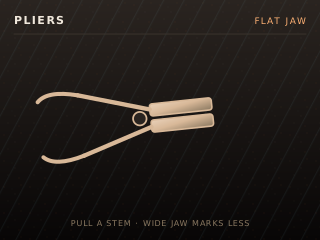
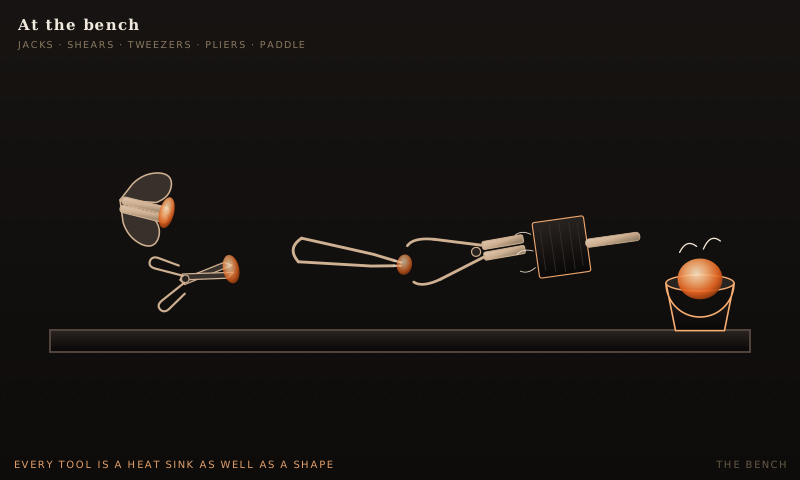
Flat-jawed pliers for pulling a stem, crimping or holding a punty.
Specifications
- Length
- 250 – 400 mm
- Material
- Stainless or high-carbon steel
- Jaw width
- 10 – 30 mm
- Jaw finish
- Smooth and flat; serrations are for a different trade
- Handle
- Long, often with a return spring
- Weight
- 0.4 – 0.9 kg
- Grip capacity
- Up to about 30 mm
Technical parameters
- Flat jaws
- The whole point — they spread the contact and mark less
- Parallel jaws
- Better still: they grip evenly across a stem
- Heat
- Warm before use; a cold jaw cracks a stem
- Pairing
- Used with tweezers and jacks, not as a substitute
- Cost band
- Low
Overview
Glassworking pliers are flat-jawed, long-handled and blunt — quite different from the serrated electrical pliers most people picture. They are used to pull a stem, hold a punty while it sets, crimp a decorative detail, and squeeze a base flat. Because they grip across a wide face they mark the glass less than tweezers, but they still chill it, so contact is short and on hot glass.
Where it fits in the process
Pliers is used in shape. The stage decides how hot the glass has to be when the tool touches it, which in turn decides how much of the work it can do in one pass.
Safe use
- Hot pliers burn. Rack them, never pocket them.
- A stem pulled with cold pliers will crack. Warm the jaws first.
- Do not use pliers to hold a piece you are about to blow — the grip will mark the wall.
- Keep the handles out of the furnace mouth. The heat travels.
How it is used
- Warm the jaws, then grip and pull steadily. A jerky pull leaves a kink.
- Use the widest jaw that fits the job — a wide jaw spreads the chill.
- Pull a stem while the glass is hot and the stem is thin. Once it stiffens, reheat.
- Crimp decoration on hot glass and re-flame immediately so the marks close.
- Keep the jaws clean. Glass dust on a jaw imprints on every piece.
Compatible glass types
Matching the tool to the glass family matters less than matching the glass to itself — see the COE compatibility calculator before combining two glasses.